

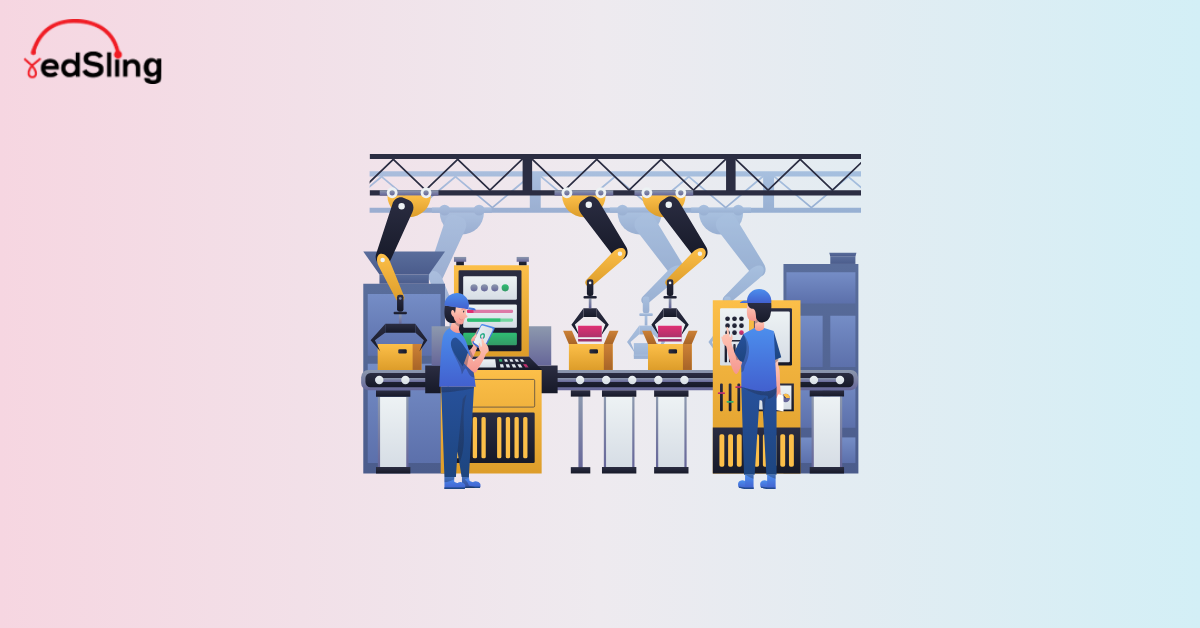
The manufacturing industry is undergoing a technological revolution, with innovations in robotics, automation, and digital transformation redefining how products are designed, assembled, and delivered. From automobile manufacturing to precision engineering, emerging trends are boosting efficiency, reducing costs, and enhancing flexibility. As industries race toward greater automation and intelligence, manufacturers that embrace these trends will gain a significant competitive edge in the global market.
The Future of Manufacturing
Here are some of the biggest shifts in technology that are shaping the future of manufacturing.
Robotics & Automation: The Backbone of Smart Manufacturing
Robotics and automation have long been at the heart of industrial efficiency, but modern advancements are pushing their capabilities further than ever before. Robots are no longer just confined to repetitive assembly line tasks—they are becoming more adaptive, intelligent, and collaborative.
- Flexible Automation – AI-powered robots can now adjust to different tasks without reprogramming, reducing downtime and increasing efficiency.
- AI & Computer Vision – Machines can recognize patterns, inspect quality, and optimize workflows with unprecedented accuracy.
- Predictive Maintenance – IoT-connected robots can detect early signs of wear and tear, predicting failures before they happen and minimizing costly downtimes.
Example: In automotive factories, Franka Emika’s agile robotic arms and KUKA’s AI-driven robots are revolutionizing production lines, enabling car manufacturers to handle complex assemblies with precision and speed.
The Rise of Smart Factories
- The transition to smart factories is transforming manufacturing into a highly connected, data-driven environment. Through the use of IoT, AI, and cloud computing, manufacturers can now optimize real-time decision-making and improve operational efficiency.
- Digital Twins – Virtual models of physical processes help manufacturers simulate, test, and refine production techniques before implementation.
- Real-Time Analytics – Sensors and connected devices enable businesses to monitor equipment health, track output, and fine-tune production in real time.
- 5G & Edge Computing – Faster communication between machines ensures seamless automation, real-time data transfer, and increased production efficiency.
Example: Leading automobile manufacturers’ strategy leverages AI-driven automation, robotics, and digital twins to optimize production efficiency and sustainability. Most are starting to build the first entirely virtualized vehicle factory, where digital simulations streamline processes before physical implementation.
Automotive Manufacturing: The EV & Autonomous Revolution
The automotive industry is currently undergoing one of the biggest transformations in its history, fueled by the rise of electric vehicles (EVs) and autonomous driving technology. To stay ahead, manufacturers must redesign their production lines to accommodate new materials, battery technologies, and AI-driven vehicle systems.
- EV Battery Gigafactories – Automakers are setting up new high-capacity battery plants to mass-produce lithium-ion and solid-state batteries, making EVs more accessible and affordable.
- AI-Driven Manufacturing – AI is being used to optimize vehicle designs, reduce defects, and personalize features in real-time, creating smarter, more efficient vehicles.
- Lightweight Materials & 3D Printing – The use of carbon fiber, aluminum, and additive manufacturing is reducing vehicle weight, increasing efficiency, and enabling rapid prototyping.
Example: Leading auto manufacturers are deploying robotic automation, AI-driven inspections, and machine learning algorithms to streamline EV production, allowing for faster scaling of next-generation vehicle manufacturing.
Sustainable & Green Manufacturing
As environmental concerns grow, manufacturers are rethinking production processes to make them more sustainable and energy-efficient. With increasing pressure to reduce carbon footprints and improve energy efficiency, companies are adopting new technologies to build a more sustainable future.
- Energy-Efficient Robotics – New-generation robots consume less power while delivering higher productivity, making automation more sustainable.
- Waste Reduction – AI-powered smart sorting technologies help in minimizing material waste, improving recycling, and optimizing resource utilization.
- Carbon-Neutral Factories – Companies are investing in solar, wind, and hydrogen-powered manufacturing plants to create a greener supply chain.
Example: Leading auto manufacturers are working towards creating a zero-emission factories with 100% renewable energy usage, setting a gold standard for sustainable manufacturing.
IT in Manufacturing: The Role of Digital Transformation
To remain competitive, manufacturers must go beyond hardware advancements and embrace intelligent software solutions. The rise of AI, data analytics, and cloud computing is reshaping factory operations, enabling businesses to gain valuable insights and optimize production.
- AI & Data Analytics for Process Optimization – AI-driven insights help predict demand, reduce waste, and streamline operations for maximum efficiency.
- Cloud & Edge Computing for Real-Time Insights – Modern factories leverage cloud and edge computing to process data instantly, ensuring faster and smarter decision-making.
- Cybersecurity & Secure IT Infrastructure – With growing digital connectivity, manufacturers must secure their networks, protect intellectual property, and prevent cyber threats.
Example: Manufacturers are leveraging cloud data platforms to analyze vast amounts of factory data in real time, optimizing production and reducing machine downtime through predictive analytics. By harnessing AI-driven insights, companies can enhance efficiency, improve quality control, and drive smarter decision-making across their operations.
How redSling Empowers Manufacturing Innovation
As manufacturers embrace Industry 4.0, the need for flexible, scalable, and rapid software solutions has never been greater. Traditional software development cycles are too slow, making Enterprise No-Code platforms like redSling a game-changer for modern manufacturers.
Why redSling in Manufacturing?
redSling offers an advanced No-Code platform that empowers manufacturers to quickly create and deploy complex applications, all while maintaining security, scalability, and speed. Here’s why redSling is the ideal choice for the manufacturing industry:
- Build Complex Industrial Applications Fast – No-Code accelerates development time, allowing manufacturers to deploy dashboards, automation systems, monitoring tools and AI driven applications in weeks instead of months.
- Platformless Deployment & Security Air-Gap – Unlike traditional software platforms, redSling enables self-contained, infrastructure-agnostic deployments, making it ideal for high-security manufacturing environments.
- 3D Modelling & Digital Twins – redSling supports interactive 3D modelling, enabling manufacturers to visualize and simulate real-world factory operations, robotic movements, and AI-driven optimizations.
Real-World Applications of redSling in Manufacturing
Here’s are some real world examples of redSling Enterprise No-Code used in the modern manufacturing industry:
- Franka Emika Data Visualization – The redSling application integrated natively with Snowflake, enabling real-time data visualization and providing a control interface for the robots for optimised movements and energy management.
- Fraunhofer IPA Industrial Metaverse Solution – Leveraging redSling’s 3D modelling, Fraunhofer developed immersive industrial metaverse solutions for real-time collaboration in industrial design and AI-driven applications like bin picking, showcasing how advanced simulations can enhance manufacturing processes.
- Snowflake Integration – redSling seamlessly connects with AI data platforms like Snowflake natively, enabling real-time factory analytics and predictive maintenance insights.
By removing traditional coding barriers, redSling empowers manufacturers to quickly prototype, deploy, and scale mission-critical applications, helping businesses stay ahead in the Industry 4.0 revolution.
Final Thoughts: The Future of Manufacturing Is Digital
The manufacturing landscape is evolving at a rapid pace, and those who fail to embrace digital transformation and advanced automation risk falling behind. The convergence of robotics, AI, cloud computing, and No-Code development is not merely an evolution; it is a revolution that is reshaping the industry. AI, automation, and data-driven decision-making are at the forefront, driving process optimization and significantly reducing operational costs.
No-Code platforms, such as redSling, are enabling manufacturers to accelerate software development, allowing them to deploy solutions quickly without being tied to a single vendor. Additionally, secure, platformless, and cloud-agnostic infrastructures are ensuring that businesses can scale seamlessly while maintaining flexibility and enterprise-grade security. Embracing these innovations is essential for manufacturers looking to stay competitive and future-proof their operations.