


The Shift from Database Choice to Architectural Freedom
In enterprise application development, database selection has traditionally been one of the earliest and most foundational architectural decisions. Once chosen, most often a Relational Database only, it effectively shaped the structure of the entire system, influencing how applications were designed, built, and scaled.
That principle still technically holds today: data architecture remains a deliberate design choice made at the outset of application development.
What has changed, however, is the nature of the applications themselves. Modern enterprise systems are no longer static or monolithic. They are dynamic, distributed, and increasingly shaped by real-time events, AI-driven workflows, integrations, and unstructured data streams.
In this context, the question is no longer simply “SQL or NoSQL?” The more important question is: does your platform allow you to use the right data model for the right part of the application natively, without compromise, refactoring, or architectural workaround?
This represents a shift away from database-centric thinking toward architecture-centric design, where the focus is not just the data store itself, but how the entire system is composed, connected, and evolved over time.
SQL and NoSQL: Complementary, Not Competing Models
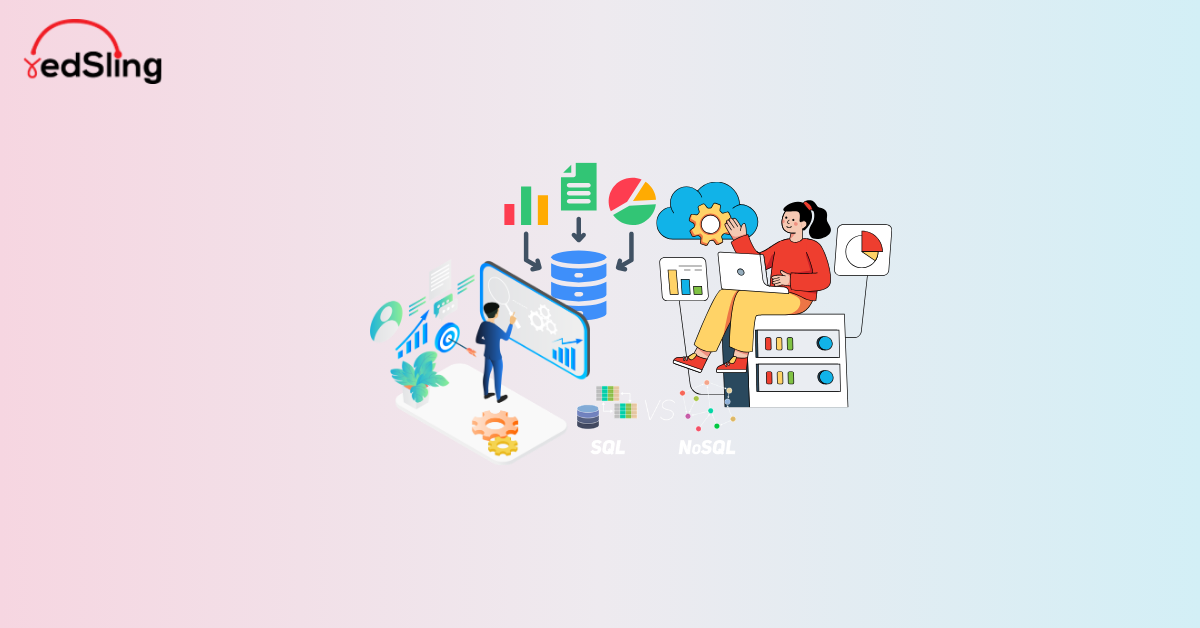
For years, SQL and NoSQL have been positioned as competing paradigms. In reality, modern enterprise applications require both, applied thoughtfully across different applications and use cases.
Relational databases remain essential for structured, transactional workloads where consistency, integrity, and governance are critical. Meanwhile, NoSQL Non-Relational databases have become indispensable for flexible, high volume, and rapidly evolving data structures.
The challenge is not choosing between them but enabling both as first class capabilities within the enterprise architecture, without introducing fragmentation or complexity.
Understanding the Strengths of Each Model
SQL (Relational Databases): Relational databases are designed around structure and consistency. They excel in environments where data relationships are clearly defined and long-term stability is required. Their strength lies in strict schemas, transactional integrity, and predictable behaviour, making them ideal for financial systems, ERP platforms, and regulated enterprise applications where accuracy and auditability are non-negotiable.
However, this same rigidity can become a constraint in fast changing environments. When business requirements evolve or data structures need to adapt quickly, schema changes can introduce friction, migration effort, and development delays.
NoSQL (Non-Relational Databases): NoSQL systems prioritise flexibility and scalability. They are designed for environments where data structures are fluid, high volume, and continuously evolving. This makes them well suited for use cases such as IoT data ingestion, event streaming, content management, and AI driven applications.
Their advantage lies in adaptability and performance at scale. However, this flexibility can introduce complexity in governance, consistency management, and system wide data coherence when not carefully architected.
The Real Enterprise Problem: Fragmented Data Architecture
In most enterprise environments, applications naturally evolve into hybrid ecosystems. Relational Databases support core transactional workloads, while NoSQL systems are adopted for specialised, high-volume, or unstructured use cases.
The challenge is not the coexistence of multiple data models, but the lack of coherence between them. In many organisations, these systems are distributed across different platforms, integration layers, and ownership boundaries. Over time, this results in fragmentation: data spread across environments with differing structures, access patterns, and governance rules. At the heart of this issue is the absence of a “coherent data architecture,” one that defines a single logical data model or system-wide conceptual model of data across the entire application landscape.
The consequence is not only technical complexity, but also a loss of clarity at the system level. While each component may function effectively in isolation, the overall architecture becomes increasingly difficult to reason about, govern, and evolve.
This challenge becomes even more pronounced in the context of AI. Modern AI systems do not simply require more data, they require data that is structured, consistent, and contextually aligned. Fragmented architectures introduce duplication, ambiguity, and inconsistency, which directly degrade the reliability and effectiveness of AI-driven outcomes.
What needs to change is not the use of SQL or NoSQL, but the way enterprise systems bring these models together. The shift is from managing multiple disconnected data stores to designing for coherence, data that is consistent, governed, and usable across the entire architecture.
The Structural Limitation in Traditional Platforms
Many application development platforms still impose implicit architectural constraints that influence database decisions from the outset. In most cases, Relational Databases form the default foundation, while NoSQL Non-Relational Database support is treated as an extension rather than a native capability.
This creates a situation where SQL becomes the primary design model, and NoSQL is introduced only when required through external integrations or additional services. The result is subtle but significant: the platform shapes the architecture, rather than the architecture being driven by business needs.
Over time, this leads to systems that rely on connectors, middleware, and parallel data stores, adding complexity, increasing maintenance overhead, and limiting architectural clarity.
A Different Approach: Native Database Flexibility
A more modern approach removes the assumption that a single database model must dominate application design. Instead, SQL and NoSQL are treated as equal, native capabilities within the same application environment.
In redSling, this is not an abstract concept. It is built into how applications are designed and delivered. The choice of database is made deliberately at the application level, based on the nature of the problem being solved. It is not an afterthought, and it does not rely on external integrations or workarounds.
Within redSling:
-
- SQL and NoSQL are both supported natively within the platform
- The data model is defined per application or project at design time
- The choice is aligned to business and architectural intent, not platform limitation
- Teams retain flexibility within each paradigm, including database vendor selection and deployment control
This approach allows organisations to design systems that are fit for purpose from the outset. Each application is built on the most appropriate data model, while remaining aligned to a broader, coherent architecture. Rather than forcing standardisation around a single database model, redSling enables intentional diversity with architectural clarity.
Key Characteristics of Native Database Flexibility
SQL and NoSQL as First-Class Choices: In redSling, both Relational and Non-Relational databases are treated as core capabilities within the same application framework. SQL is applied where structure, consistency, and transactional integrity are required. NoSQL is applied where flexibility, scale, and evolving data structures are essential.
This is not achieved through connectors or external services. Both models are available natively within the platform, allowing each application to be built on the most appropriate foundation without introducing additional systems or complexity.
Architecture Defined at Build or Deployment Time: In redSling, database decisions are made as part of the application design and build process. Each application is created with a clear data model aligned to its specific use case and workload requirements. This ensures that the architecture is intentional from the outset, rather than being shaped by platform defaults.
At the same time, teams retain flexibility within the chosen model. This includes the ability to select database vendors, define deployment environments, and align infrastructure to enterprise standards. The result is an architecture that is both deliberate and adaptable, without compromising on clarity or control.
Unified Data Interaction Layer: A key strength of redSling is that both SQL and NoSQL integrate seamlessly with the rest of the application stack. Data models connect directly with user interfaces, APIs, and business logic within a single, unified environment. Developers do not need to manage separate interaction patterns, transformation layers, or orchestration tools for different data systems.
This creates a consistent and predictable data interaction model across applications, improving developer efficiency and reducing architectural overhead. More importantly, it ensures that data remains accessible, governed, and usable across the system, which is critical for analytics, integration, and AI driven workloads.
redSling’s platformless, composable architecture enables SQL and NoSQL systems to coexist and can still be governed through a unified application layer, where data models, business logic, and access patterns are defined consistently at design time.
Why This Matters: From Data Architecture Efficiency to AI Readiness
The value of native database flexibility in redSling is not simply reduced complexity or improved developer experience. Those are important outcomes, but they are no longer the primary drivers of architectural change.
The real shift is being driven by AI and intelligent systems. Modern AI systems do not struggle with a lack of data. They struggle with a lack of clear, consistent, and contextually aligned data. When data is fragmented across systems, models, and integration layers, the challenge is no longer access, but interpretation.
This is where architectural clarity becomes critical. When SQL and NoSQL are treated as native, intentional choices within a unified application environment, the result is not just technical simplification. It creates structured coherence across data models, where information is consistently defined, accessed, and governed within the same architectural boundary.
This has direct implications for AI readiness:
-
- AI models rely on consistent data semantics across systems
- Training and inference quality is impacted by data fragmentation and duplication
- Real time AI decisioning requires predictable and unified data access patterns
- Governance and lineage become essential for trust and explainability
In fragmented architectures, AI systems must first reconcile inconsistency before they can generate value. In more coherent architectures, data is already structured for consumption.
This is the key shift. The goal is no longer just to manage multiple data systems efficiently. It is to ensure that the underlying architecture produces data that is usable, trustworthy, and AI ready by design.
Conclusion: Data Architecture as a Foundation for Intelligence
The evolution of enterprise systems is no longer just about performance, scale, or integration efficiency. It is about enabling intelligent systems to operate on clean, consistent, and meaningful data foundations.
Platforms like redSling move this conversation forward by treating SQL Relational Databases and NoSQL Non-Relational Databases not as competing choices, but as native, intentional components of application architecture.
This shifts the focus from managing data complexity to enabling data clarity at the point of design, which is what ultimately determines how effectively modern AI systems can deliver value.