
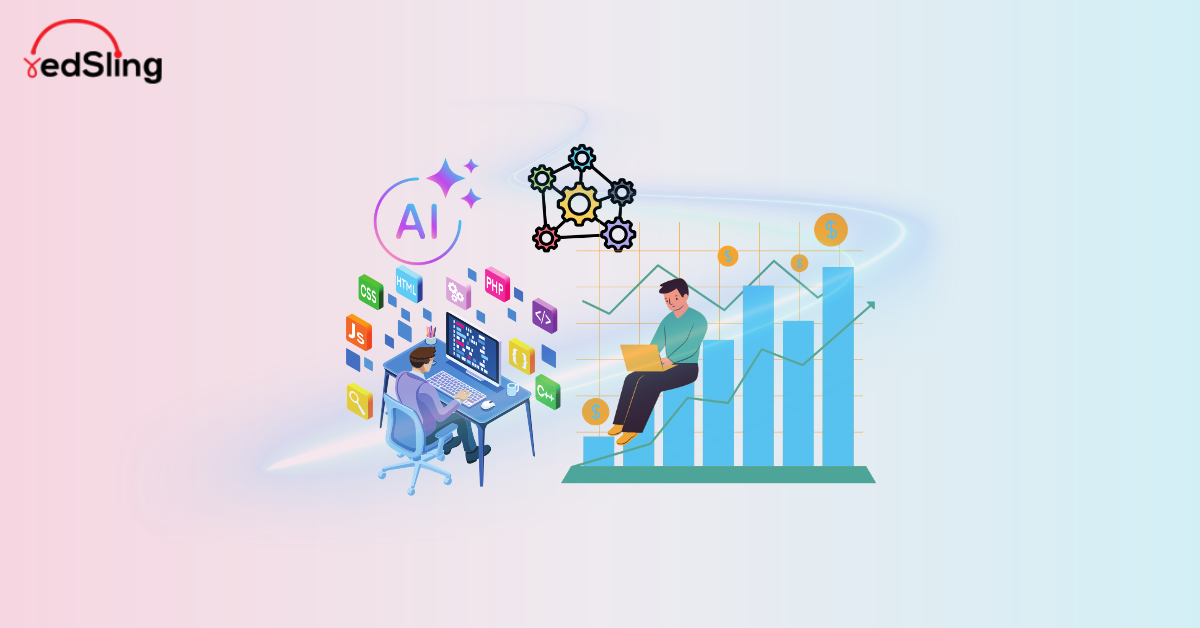
AI coding tools are making developers faster. But are they making enterprises faster?
Tools such as ChatGPT, Claude and Cursor have fundamentally changed the way software is written. Yet faster code generation does not automatically translate into faster enterprise delivery. The reason is straightforward: writing code is only one part of a much larger process.
Before an application delivers business value, requirements must be translated into working solutions, systems and data must be integrated, security and quality must be assured, applications must be deployed, and documentation and ongoing maintenance must be addressed. These activities often account for a significant proportion of the time, cost and complexity involved in enterprise software delivery.
Many organisations are adding AI tools to an already fragmented delivery environment. Requirements sit in one system, code is generated in another, reviews happen elsewhere, and deployment follows a separate process. Each tool may improve an individual task, but without shared context, coordinated workflows and consistent governance, the enterprise is left with faster fragments rather than faster outcomes. The productivity gains made by individuals do not necessarily translate into greater organisational delivery capability.
The real opportunity is to accelerate the entire journey from business intent to operational capability.
Enterprise Acceleration is an End-to-End Proposition
Enterprise Acceleration is about reducing the time, complexity and constraints involved in turning business needs into working software and operational outcomes, without compromising quality, resilience or enterprise control. It shifts the focus from how quickly software can be produced to how effectively an organisation can deliver, deploy and continuously evolve the capabilities its business needs.
It extends well beyond development. It encompasses six connected dimensions: development, AI, integration, deployment, governance and innovation. Each addresses a different source of friction in the enterprise delivery lifecycle.
Development Acceleration – From business requirements to working applications.
This is about reducing the time and effort required to translate business needs into functional software. It means moving beyond extensive hand-coding, repetitive boilerplate and fragmented development processes towards more visual, reusable and efficient ways of building applications.
The objective is to shorten the path from an idea or requirement to a working application, while maintaining the engineering discipline needed for enterprise-grade solutions.
AI Acceleration – From isolated assistance to intelligence across the lifecycle.
AI acceleration is not simply about generating code faster or giving developers access to AI assistants. It is about embedding intelligence across the software lifecycle: requirements, design, development, testing, deployment and documentation.
Shared context, coordinated AI agents, human oversight and consistent governance enable AI to contribute to the broader delivery process, rather than operate as a collection of disconnected tools and individual prompts.
Integration Acceleration — From disconnected systems to connected capabilities.
Enterprise applications must work within an existing ecosystem of systems, data, services, people, workflows and devices. Integration acceleration reduces the time and complexity involved in connecting these components.
It moves away from treating every connection as a bespoke integration project and towards an application-first approach in which the necessary connections are considered as part of the application architecture. This is what turns an application from a standalone solution into a functioning part of the enterprise.
Deployment Acceleration — From completed software to operational capability.
An application is not delivering business value simply because it has been built. It must be deployed reliably into the environments where the organisation needs it to operate. Deployment acceleration reduces the friction associated with environment configuration, release processes and infrastructure constraints.
It also means avoiding unnecessary dependencies on proprietary runtimes, so applications can be deployed across the organisation’s chosen cloud, on-premises, hybrid or edge environments.
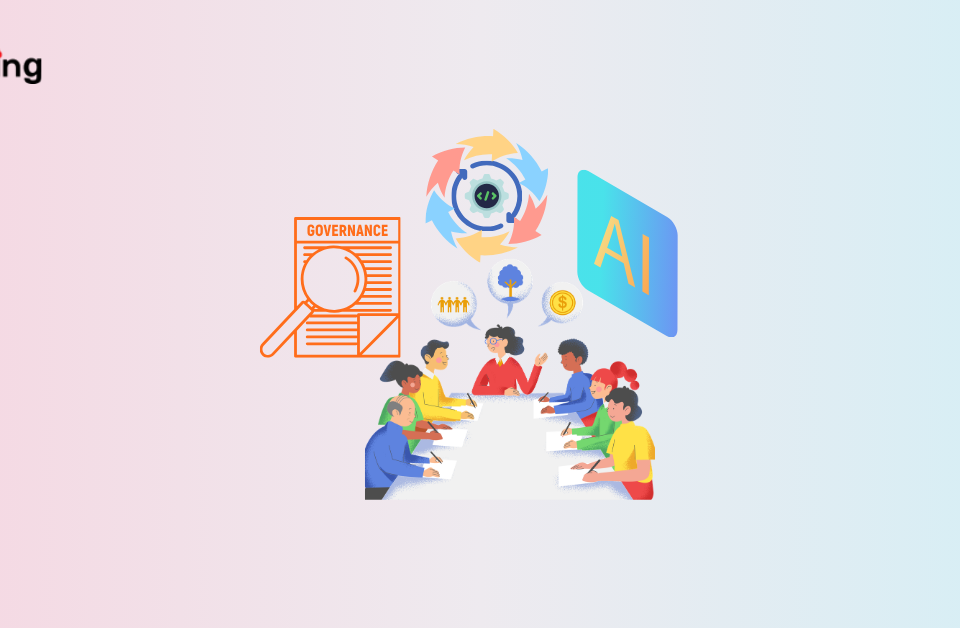
Governance Acceleration — From controls imposed later to accountability by design.
Security, access control, auditability and accountability cannot be afterthoughts added once an application is ready for production. Governance acceleration embeds these considerations into the application and delivery lifecycle from the outset.
Role-based access, ownership, configuration management, secrets and audit trails help ensure that speed does not come at the expense of enterprise oversight. The aim is to make it easier to deliver quickly within the organisation’s security, regulatory and operational requirements.
Innovation Acceleration — From constrained experimentation to continuous evolution.
The ultimate measure of acceleration is an organisation’s ability to respond to changing business needs. Innovation acceleration enables teams to experiment, adapt and evolve applications without being held back by lengthy development cycles, rigid platforms or architectural dependencies.
It makes innovation more accessible and repeatable, allowing organisations to move from isolated proofs of concept to capabilities that can be continuously improved and scaled.
These six dimensions are interdependent. Accelerating development alone leaves integration, deployment and governance as potential bottlenecks. Faster AI-assisted development can create more applications, but if those applications are difficult to connect, deploy or maintain, the enterprise has simply moved the constraint further down the lifecycle. Likewise, innovation cannot be sustained if every new application introduces another dependency or increases the complexity of the technology estate.
This distinction matters particularly as organisations pursue AX, or AI Transformation. AX is not simply the introduction of AI into existing tasks; it involves rethinking how work is performed and how intelligence is embedded into business operations.
Many organisations have established AI strategies, proofs of concept and pilots, but the challenge is translating those ambitions into governed, connected and deployable applications at enterprise scale. The gap is increasingly one of delivery capability: moving from AI ambition to operational impact with context, consistency and control.
Four Engines for Enterprise Acceleration
This is where redSling’s Enterprise Accelerator brings together four complementary engines: BUILD, THINK, CONNECT and CONTROL. Together, they address the application lifecycle rather than optimising a single stage of it. Each addresses a distinct source of friction, while their combined effect is to create a more coherent and governed path from business requirements to deployed applications.
BUILD accelerates the creation of enterprise applications. Through visual UI and Logic Builders, teams can develop full-stack applications without the traditional dependence on extensive hand-coding or rigid templates. The visual approach brings the user experience, business logic, workflows and integrations into a common development environment. Its Agentic AI Dev Squad introduces specialised AI agents, coordinated by an Orchestrator, into the development process. This supports work across requirements, design, build, testing and delivery.
The objective is not to replace engineering judgement, but to reduce repetitive work, standardise delivery and enable business and technical teams to move from requirements to working applications more efficiently. Engineers can focus more of their time on architecture, complex problem-solving and the work that genuinely requires their expertise.
THINK moves AI beyond code generation. Rather than relying on isolated prompts and disconnected tools, redSling orchestrates specialised agents across the software lifecycle, from requirements and design through build, testing, deployment and documentation. Shared context carries through the process, allowing each stage to build on the work and knowledge established earlier.
Human oversight, consistent policies and an audit trail provide continuity and accountability across the AI-assisted workflow. Organisations can also bring their own large language models, retaining choice over the models used and how they align with their requirements for performance, cost, privacy and control. This is a shift from individual AI productivity to coordinated, AI-orchestrated engineering.
CONNECT makes acceleration useful across the enterprise. Applications rarely operate in isolation. They need to work with existing systems, data, services, people, workflows and, increasingly, operational technology. Integration is frequently where the apparent speed of a new application encounters the complexity of the real enterprise. redSling’s application-first architecture places the application and its business purpose at the centre of design and integration.
APIs, services, databases and device connectivity can be brought together within the application, rather than treated as a collection of separate integration projects. Project-level settings also provide a defined place for ownership, access controls, AI configuration, secrets, authentication, environment-specific base URLs and audit logs. For operational environments, connectivity can extend to systems such as PLCs, SCADA and building management systems. The result is a more cohesive approach to connecting business and operational capabilities.
CONTROL ensures that speed does not come at the expense of ownership. This is a defining difference in the redSling approach. Applications can be exported as self-contained, OCI-compliant images and deployed across the customer’s chosen public or private cloud, on-premises, hybrid, edge or air-gapped environments. There is no proprietary redSling production runtime underneath the deployed application.
Customers retain control of their architecture, infrastructure, data and AI choices, rather than having those decisions determined by the platform provider. Governance is addressed through project-level ownership and role-based access controls, configuration management and audit trails that record who changed what and when. This helps make accountability part of the delivery model, rather than an additional layer imposed after development.
The four engines are deliberately interconnected. BUILD and THINK create speed; CONNECT makes that speed valuable across the enterprise; CONTROL makes the resulting innovation sustainable, portable and governed. Together, they address the broader delivery system rather than simply making one part of it faster.
When productivity rises and technical debt falls, innovation becomes repeatable, not risky. redSling avoids adding new debt to the applications built on it. Existing legacy systems still need modernising.
Acceleration without Adding Dependencies and Debt
For enterprise leaders, the question is not simply how quickly an application can be built. It is what the organisation must take on to build, run and evolve it. The architecture chosen today will shape the cost, flexibility, security and maintainability of that application for years to come.
Traditional platforms can accelerate development, but they can also introduce runtime dependencies, infrastructure constraints and long-term vendor reliance. Over time, these dependencies can become another layer of technical debt. A faster development process is of limited value if the resulting application is difficult to move, expensive to maintain or constrained by the platform on which it depends. The enterprise may have reduced the time to build, only to increase the cost and complexity of operating the solution.
redSling takes a different approach. Its platformless architecture separates the environment used to design and evolve applications from the environment in which they run. The application is deployed as a self-contained artefact, without requiring a proprietary redSling runtime in production. This gives enterprises the freedom to choose where applications run and how they manage their infrastructure and AI. It also means that the deployed application is not dependent on the continued availability of the development platform to operate.
It is important to distinguish between avoiding new dependencies and eliminating existing technical debt. Legacy systems still require modernisation, and no single technology removes the architectural and organisational challenges accumulated over decades. The opportunity is to build new capabilities, and progressively replace selected legacy applications, without creating another generation of platform and runtime dependencies. Acceleration should reduce the burden of the technology estate, not add to it.
From AI Ambition to Enterprise Capability
AX is the strategic ambition; Enterprise Acceleration is a practical part of how that ambition becomes software and operational capability. Organisations need more than AI tools that make individuals productive. They need a governed way to translate business priorities into applications, coordinate AI across the delivery lifecycle, connect those applications to the enterprise, deploy them within their own environments and continue evolving them as requirements change.
That is the proposition behind redSling Enterprise Acceleration. It brings enterprise No-Code development, AI-Orchestrated engineering, Application-First architecture and Sovereign Platformless deployment into one coherent approach. It is designed to help organisations move beyond isolated productivity gains towards a repeatable enterprise capability for delivering software and innovation.
For CIOs, CTOs, enterprise architects and transformation leaders, the opportunity is to rethink what acceleration should mean. Not simply more code produced in less time, but more business capability delivered with less friction, less dependency and greater control. In an environment where AI is rapidly changing how software is created, the competitive advantage will increasingly belong to organisations that can turn that intelligence into operational outcomes reliably and at scale.
redSling is not another platform for the enterprise to migrate onto. It is an Enterprise Accelerator designed to help enterprises build, connect, deploy and evolve software on their terms.