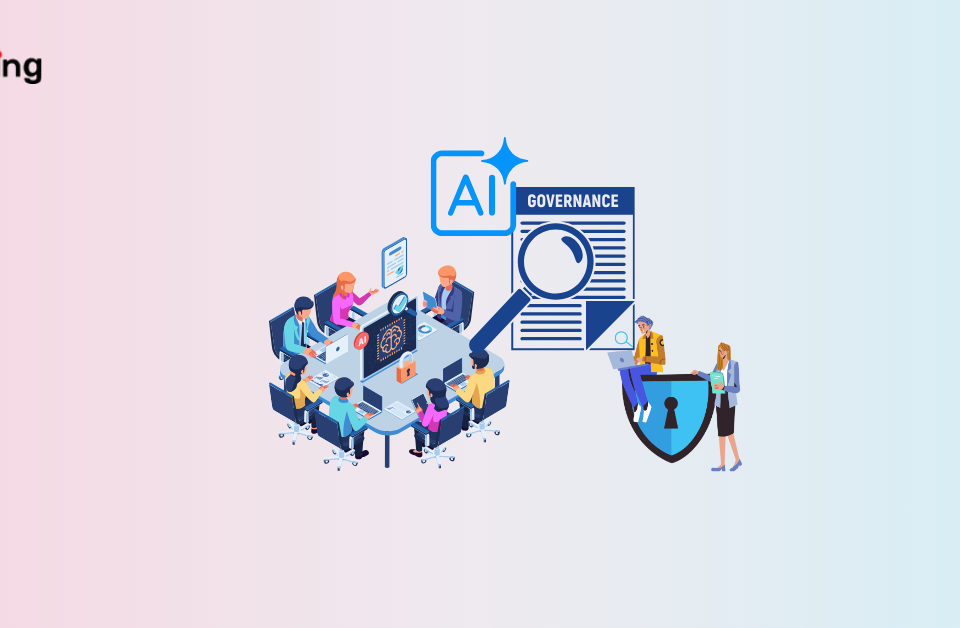


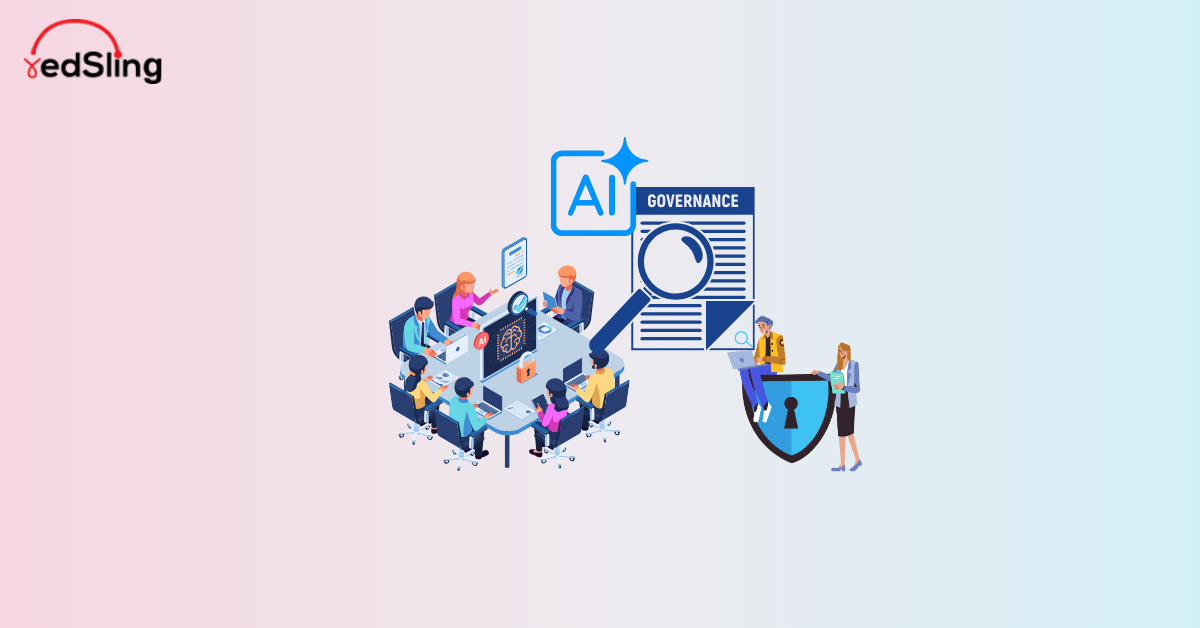
Artificial intelligence has moved rapidly from experimentation into enterprise adoption. Organisations across industries are embedding AI capabilities into software development, customer engagement, operations, analytics, healthcare, financial services, manufacturing, and decision-support processes. Generative AI and AI agents are enabling significant improvements in productivity, automation, and innovation, fundamentally changing how organisations design, build, and operate digital systems.
However, as AI adoption accelerates, a critical governance challenge is emerging. While organisations have spent decades establishing mature governance frameworks for cybersecurity, enterprise applications, financial controls, privacy, and operational risk, many AI initiatives are evolving without the same level of oversight and accountability.
This creates a significant challenge for enterprise leaders. AI systems are no longer simply assisting with individual productivity tasks; they are increasingly influencing business-critical decisions, generating software, analysing sensitive information, and automating operational processes. As a result, organisations must demonstrate not only that their AI systems are capable, but that they are secure, transparent, explainable, and governed appropriately.
The question facing enterprises is no longer simply whether AI can deliver value. The more consequential question, the one now being asked in boardrooms, audit committees, and regulatory consultations alike is whether organisations can confidently scale AI while maintaining trust, regulatory compliance, and operational accountability.
The future of enterprise AI will be shaped not only by intelligence and automation, but by governance.
The Emerging AI Governance Challenge
The first phase of enterprise AI adoption has largely focused on opportunity. Organisations have explored how AI can accelerate software development, improve employee productivity, automate repetitive processes, enhance customer experiences, and unlock new forms of business intelligence.
These benefits are substantial. However, AI introduces risks that differ fundamentally from those posed by traditional technology platforms. Conventional software applications generally operate through predefined rules and deterministic logic. AI systems, particularly generative AI models, operate differently. They generate outputs based on learned patterns, contextual information, and probabilistic reasoning. This introduces complexity around accuracy, transparency, explainability, and accountability that most enterprise risk functions were not originally designed to evaluate.
When AI generates application code, assists with financial analysis, supports healthcare decisions, or interacts directly with customers, organisations need confidence that these activities occur within appropriate governance boundaries. Increasingly, that confidence is being demanded not just internally, but by regulators, auditors, insurers, and customers themselves.
At a minimum, enterprise leaders need to be able to answer six questions with evidence, not assurance:
- Which AI model generated the output.
- What information influenced the result.
- Whether sensitive data was exposed.
- Whether the output was reviewed.
- Who approved the final decision.
- Whether the activity can be reproduced and audited.
Without these capabilities, organisations face material challenges in managing AI risk at enterprise scale, challenges that compound as AI moves from isolated pilots to embedded, business-critical infrastructure.
AI governance therefore represents a natural evolution of existing technology governance practice, rather than an entirely new discipline invented from scratch. It extends established security and compliance principles into an environment where machines are increasingly participating in decision-making alongside people.
Why Auditability Becomes Critical for Enterprise AI
Auditability has always been a foundation of enterprise trust. Financial systems maintain transaction histories. Identity platforms record access events. Infrastructure platforms monitor operational activity. These records provide organisations with evidence of what happened, when it happened, and who was responsible, evidence that underpins everything from statutory audits to incident response to customer assurance.
AI systems require the same standard of transparency, and arguably a higher one, given the opacity of the underlying models. As AI becomes embedded into software development and business operations, organisations need a complete record of AI-assisted activity throughout the lifecycle. This includes understanding user interactions, model selection, prompts submitted, outputs generated, approvals provided, and changes implemented that are captured as a matter of architecture, not reconstructed after the fact.
This information is essential for several converging reasons. From a regulatory perspective, audit trails provide evidence that organisations are operating within defined controls. From a security perspective, they enable rapid, accurate investigation when incidents occur. From a business perspective, they provide the board and executive leadership with confidence that AI-driven processes remain aligned with organisational objectives and risk appetite.
Without auditability, AI becomes difficult to govern, because organisations lose visibility into how outcomes were produced and what cannot be observed cannot be assured, insured, or defended. In the age of AI, trust cannot be assumed. It must be demonstrated through evidence.
The Role of Global Compliance Frameworks in AI Governance
Global compliance frameworks provide organisations with established principles for managing risk, protecting information, and maintaining operational integrity. While frameworks such as SOC 2, ISO 27001, GDPR, HIPAA, SOX, APRA, RBI, and FedRAMP were not originally designed specifically for generative AI, their underlying governance principles of security, privacy, accountability, transparency, resilience, and continuous monitoring are increasingly being extended by regulators, auditors, and enterprises to address AI-specific risk.
SOC 2: Establishing Trust in Technology Platforms
SOC 2 Type II is widely adopted by SaaS providers, cloud platforms, and technology organisations to demonstrate effective controls across security, availability, confidentiality, processing integrity, and privacy.
The growth of AI increases the importance of these controls. Organisations consuming AI-enabled platforms need confidence that AI functionality operates within controlled environments, that access is appropriately governed, and that AI activities can be monitored and reviewed.
For technology providers, SOC 2 provides assurance that AI capabilities are not operating as unmanaged features but as governed components of enterprise-grade platforms.
ISO 27001: Protecting AI Data, Models, and Infrastructure
ISO 27001 provides a structured information security management framework adopted globally across industries including financial services, healthcare, manufacturing, telecommunications, and government.
AI introduces new categories of information assets requiring protection, including prompts, models, training datasets, APIs, embeddings, generated outputs, and inference infrastructure.
These assets introduce new risks, including data leakage, unauthorised access, model manipulation, and exposure of proprietary information. ISO 27001 provides organisations with the governance discipline required to identify, manage, and reduce these risks through systematic security controls.
A significant portion of enterprise software development operates in environments where external AI tools are not simply impractical, they are impossible. Government systems, defence platforms, central banking infrastructure, and critical national services often operate in air-gapped or tightly isolated networks.
In these environments, outbound connectivity to external AI inference systems does not exist by design. This is not a policy choice that can be relaxed. It is a structural security requirement. As a result, cloud-based AI coding tools are inherently incompatible with some of the most critical software systems in the world.
The only viable path to AI-assisted development in these environments is one where the AI operates inside the enterprise boundary.
GDPR: Ensuring Privacy and Transparency in AI Processing
GDPR has established some of the world’s strongest privacy requirements, governing how organisations collect, process, store, and protect personal information.
AI increases the complexity of privacy management because personal information may be included in prompts, analysed through models, or used within automated decision-making processes.
Organisations must understand where AI processing occurs, whether information crosses geographic boundaries, how data is retained, and whether individuals maintain appropriate transparency and control. Privacy-by-design principles become increasingly important as AI becomes embedded into enterprise workflows.
HIPAA: Protecting Healthcare Information in AI Applications
Healthcare is one of the industries where AI has the potential to create significant transformation through clinical decision support, medical research, administrative automation, and patient engagement.
However, healthcare also manages highly sensitive personal information. HIPAA establishes strict requirements for protecting Protected Health Information (PHI), ensuring confidentiality, access control, and security.
As healthcare AI expands, organisations must ensure that AI systems maintain patient privacy and operate within appropriate clinical governance frameworks.
SOX: Maintaining Financial Accountability
SOX establishes requirements around financial reporting accuracy, internal controls, and executive accountability.
As organisations introduce AI into financial forecasting, reporting, auditing, and analysis, maintaining transparency becomes increasingly important. AI-generated insights cannot become an unexplainable component of financial decision-making. Organisations must retain evidence of how AI contributed to decisions, who reviewed outputs, and whether appropriate controls were applied.
APRA and RBI: Managing AI Risk in Financial Services
Financial institutions operate within highly regulated environments where technology risk management and operational resilience are fundamental requirements.
APRA in Australia and RBI in India provide frameworks that address cybersecurity, technology governance, outsourcing risk, and operational resilience. AI introduces additional considerations around lending decisions, fraud detection, customer engagement, compliance monitoring, and risk assessment.
Effective AI governance ensures financial institutions can innovate while maintaining regulatory confidence.
FedRAMP: Enabling Secure AI Adoption in Government
Government agencies are increasingly exploring AI to improve public services, operational efficiency, and decision-making. However, government environments require exceptional levels of security and accountability.
FedRAMP establishes rigorous requirements around cloud security, continuous monitoring, identity management, access controls, and operational governance. As governments pursue sovereign AI strategies, these principles demonstrate the importance of building security and auditability into AI environments from the beginning.
The Emergence of Sovereign AI and BYO LLM
As organisations move from AI experimentation to enterprise deployment, a new strategic consideration is emerging at board level: control over AI infrastructure and data. This has given rise to the concept of Sovereign AI.
Sovereign AI focuses on ensuring organisations maintain control over where AI operates, how data is processed, which models are used, and how information is governed. This is particularly important for industries handling sensitive information, including government, defence, healthcare, financial services, and critical infrastructure.
Many organisations are increasingly concerned about sending proprietary information into public AI services without sufficient control over data residency, model training practices, and regulatory obligations. This concern is not hypothetical, it is already shaping procurement policy, vendor risk assessments, and technology architecture decisions across regulated sectors.
This is driving adoption of Bring Your Own LLM (BYO LLM) strategies. BYO LLM enables organisations to select and integrate the Large Language Models that align with their security requirements, regulatory obligations, and enterprise architecture strategy. Rather than being locked into a single AI provider, organisations gain greater flexibility and control over their AI ecosystem, and the ability to demonstrate, architecturally, that sensitive prompts and data never need to leave a defined boundary.
Sovereign AI represents a fundamental shift in enterprise thinking. The future of AI will not simply be about accessing the most powerful models. It will be about ensuring organisations remain in control of how those models are used. Sovereign AI is not a retreat from innovation, it is the condition under which regulated enterprises can adopt AI with confidence.
Human Accountability in AI Systems
While AI capabilities continue to advance, accountability remains fundamentally human. AI can analyse information, generate recommendations, automate workflows, and accelerate decision-making. However, organisations remain responsible for the outcomes produced through their systems, a principle that regulators across every sector have made explicit. Regulatory accountability does not transfer to the model, it remains with the organisation and, ultimately, with named individuals inside it.
This principle is increasingly reflected across global governance frameworks. Whether in financial services, healthcare, government, or enterprise technology, AI must operate within a framework where human oversight, review, and accountability remain clearly defined.
This is why Human-in-the-Loop approaches are becoming central to responsible AI adoption. The objective is not to prevent automation, but to ensure that automation operates with appropriate governance. AI should enhance human capability while maintaining responsible decision-making. Trustworthy AI is therefore not autonomous AI without oversight. It is intelligent systems operating with transparency, accountability, and human responsibility.
Why Governance Must Be Built Into the SDLC
Traditional approaches to compliance often involve retrospective activities. Teams gather documentation, collect evidence, reconstruct decisions, and prepare audit responses after systems have already been developed.
This approach becomes increasingly untenable in an AI-enabled world. As software development becomes more intelligent, assisted, and automated, governance must become part of the development lifecycle itself. Auditability cannot be an afterthought, it must be embedded into how applications are designed, built, tested, deployed, and maintained.
Modern enterprises require development platforms that provide visibility across the entire lifecycle, capturing changes, decisions, approvals, and AI-assisted activities as they occur, not as they are reconstructed weeks later under audit pressure.
This approach transforms compliance from a manual, backward-looking process into an integrated, forward-looking capability. Rather than slowing innovation, governance becomes an enabler of responsible innovation, the mechanism by which an enterprise can move quickly precisely because it can also show, at any moment, that it remained in control while doing so.
Governance that is bolted on after delivery is evidence collection while governance that is built into the SDLC is a competitive capability.
A Platform Perspective: Building Governance into Enterprise Software Development
The principles set out in this blog of auditability, framework alignment, sovereignty, and human accountability engineered into the SDLC are, in our view, no longer optional design choices for enterprise development platforms. They are becoming baseline expectations. What follows is a brief perspective on what it looks like in practice to build a platform around these principles, drawn from redSling’s own architecture.
As organisations embrace AI-driven development, they require platforms that combine speed, flexibility, and enterprise governance in the same environment, rather than treating governance as a compliance layer bolted on after the fact. This is the philosophy behind redSling.
redSling provides an enterprise development environment where AI acceleration and governance operate together. Through project-wide audit logging, organisations gain complete visibility, traceability, and accountability across the application lifecycle. Every significant project activity is captured, providing organisations with the evidence required to support governance, security monitoring, and compliance readiness by architecture, not by after-the-fact reconstruction.
Audit logs within redSling are pre-aligned with the leading global compliance standards such as SOC 2 Type II, ISO/IEC 27001, GDPR, HIPAA, SOX Compliance, RBI/APRA, FedRAMP (Foundation Level).
For organisations adopting enterprise AI, redSling extends this governance model through its Bring-Your-Own-LLM (BYO LLM) capability, enabling organisations to maintain control over their AI model choices while supporting sovereign AI strategies, security requirements, and regulatory obligations expressed as platform architecture rather than policy statement.
The result is a development platform designed for the next generation of enterprise software delivery, where AI acceleration is combined with transparency, governance, and control. Organisations can innovate faster while maintaining confidence that every change is visible, every decision is accountable, and every application remains governed.
Conclusion: Trust as the New Currency of Enterprise AI
As AI becomes increasingly central to enterprise transformation, the organisations that succeed will not simply be those that adopt AI fastest. They will be those that can prove they can govern it responsibly.
This is not a call to slow down. It is a recognition that, in every previous wave of enterprise technology whether cloud, mobile, open banking, cybersecurity, the organisations that scaled fastest and most durably were the ones that built trust into the foundation rather than retrofitting it under regulatory or market pressure. AI will be no different, and the stakes are, if anything, higher: the systems in question now write code, inform clinical and financial decisions, and interact directly with customers at scale.
For boards, chief risk officers, chief information security officers, and technology leaders evaluating their AI roadmap, the practical takeaway is straightforward. Auditability, compliance-framework alignment, sovereign control of data and models, and clear human accountability are not compliance overhead to be minimised. They are the conditions under which AI can be scaled with confidence and, increasingly, the basis on which customers, regulators, and partners will decide who they trust with their most sensitive systems and data. The future of enterprise AI will not be defined by intelligence alone, it will be defined by trust.